Activities

Missions, teaching, research and conferences.

Missions

International missions.

International missions are one of the instruments through which the DiSAQ UNESCO Chair translates its objectives into activities on the ground. They make it possible to strengthen collaboration with partner institutions, share knowledge and methodologies, engage local stakeholders and disseminate research findings across diverse contexts. The missions carried out in Europe and the MENA region have helped to expand the Chair’s international network and to bring its expertise on entrepreneurial and innovation ecosystems into dialogue with local realities.

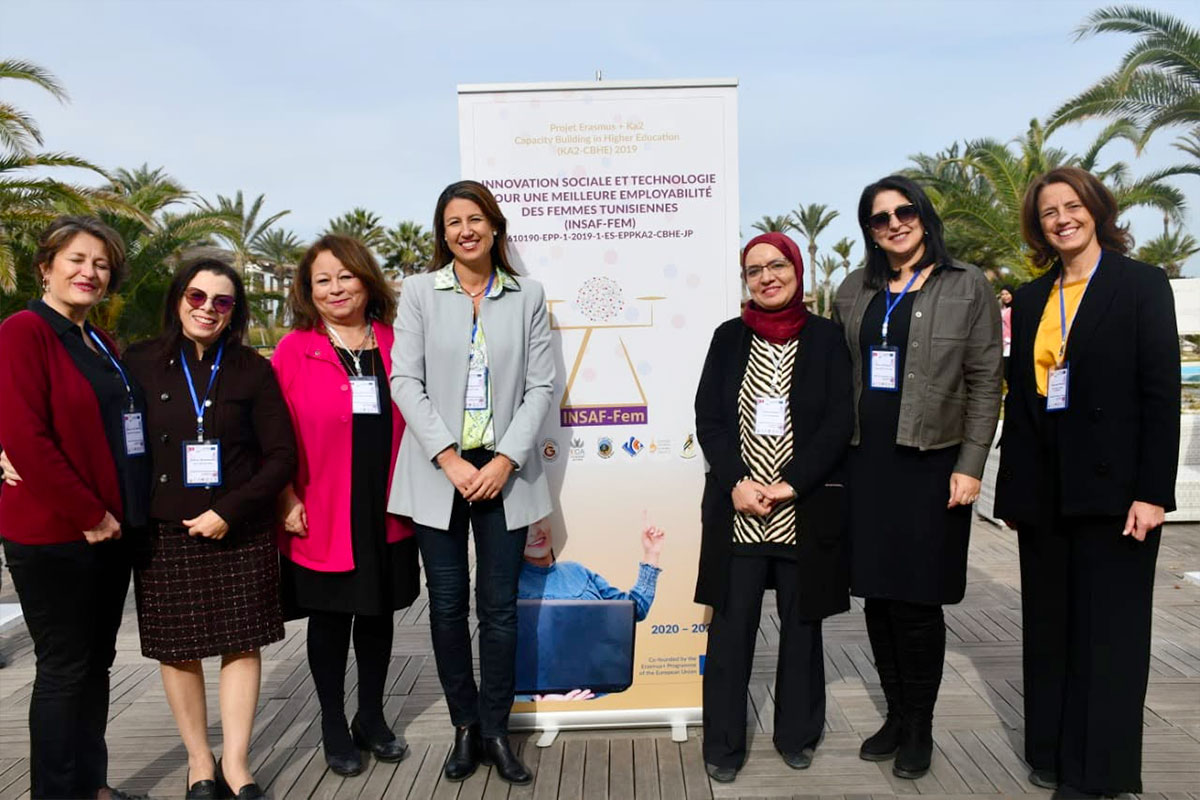
Tunisia – Women’s entrepreneurship and skills development (2022)

Within the INSAF-FEM project, the missions to Tunisia supported activities aimed at strengthening women’s entrepreneurial and digital skills and enhancing their employability. Direct engagement with Tunisian universities and civil society organisations contributed to knowledge transfer between universities and local communities, in line with the Chair’s objectives in the fields of gender equality, skills development and socio-economic inclusion in the MENA region.

Portugal, Türkiye and Greece – Sustainable agri-food supply chain (2024–2026)

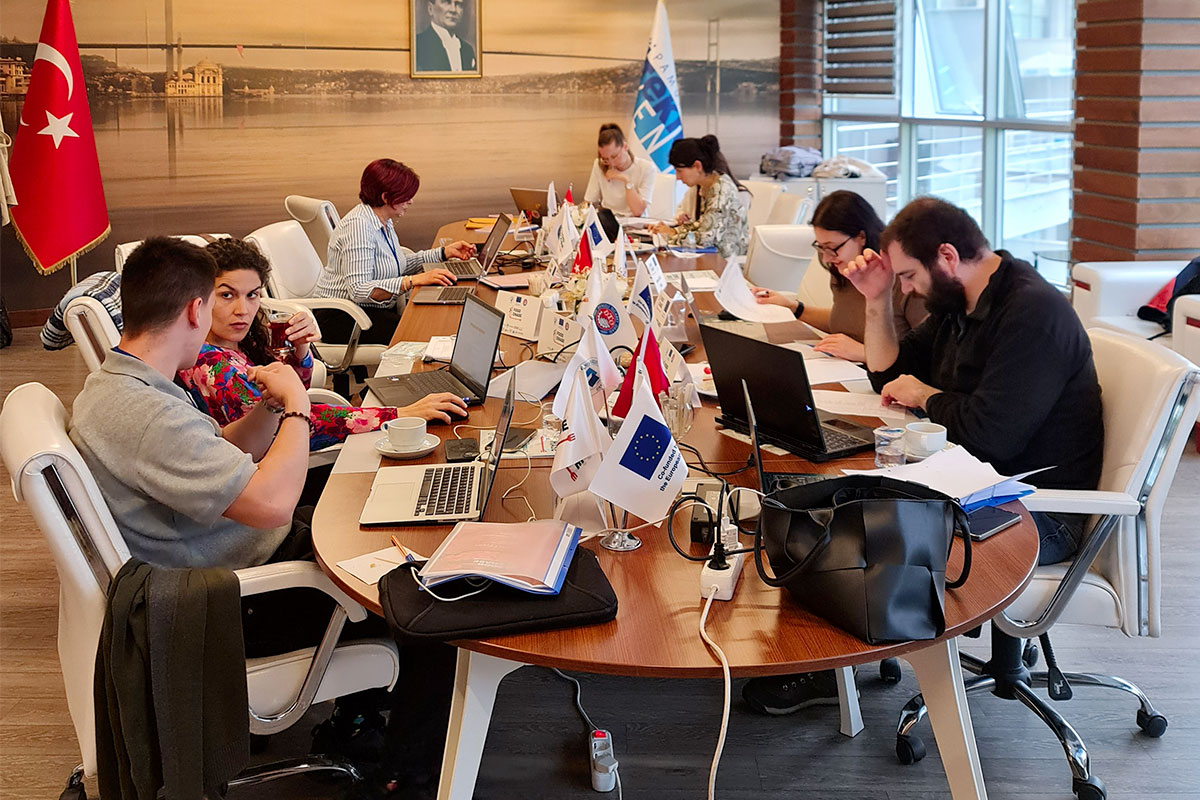
Within the FOODCHASE project, the missions carried out in Portugal in 2024, Türkiye in 2025 and Greece in 2026 brought together project partners and local stakeholders from the agri-food sector. The meetings fostered knowledge exchange, the coordination of activities and dialogue on the needs and practices of the territories involved. They also strengthened the international network of actors through which the Chair promotes collaborative innovation and the development of sustainable ecosystems.

Morocco – Ecosystem simulation methodologies (2026)

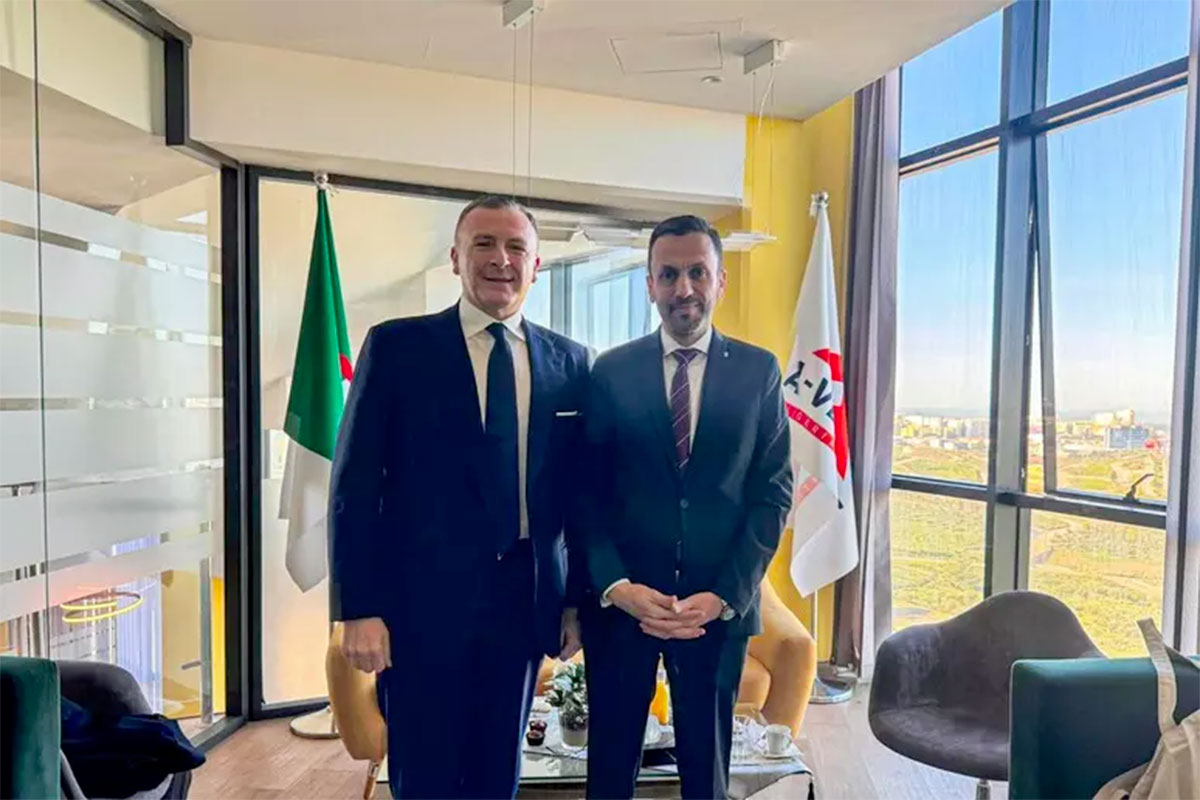
In January 2026, a mission to the École Nationale des Sciences Appliquées (ENSA) in Fez offered the Chair a further opportunity to disseminate its methodologies for the analysis and simulation of entrepreneurial ecosystems and to contribute to skills development in the MENA region.

Teaching activities

Training and skills transfer.

INSAF-FEM – Training and skills transfer
01

INSAF-FEM – Training and skills transfer

Within INSAF-FEM, DiSAQ contributed to the design of the training activities and of a model for transferring skills from universities to local communities. The team involved included Marco Ferretti, Chiara Cannavale, Lorenza Claudio and Nohaila Kartti.

The project adopted a train-the-trainer model: Master’s and doctoral students from the partner Tunisian universities followed a multidisciplinary programme so that they could share what they had learnt with civil society organisations. Among other topics, the training addressed entrepreneurship, business model development, social innovation, digital skills and online communication.

DiSAQ also helped to organise a training experience in Naples for four Tunisian students who received awards at the end of the project. The participants attended workshops on women’s leadership, carried out hands-on activities related to entrepreneurship and marketing, and met local companies, incubators and participants in the MEIM programme. These meetings gave them the opportunity to exchange experiences and entrepreneurial ideas.
SHIFT-MED – Lifelong learning for the green and digital transition
02

SHIFT-MED – Lifelong learning for the green and digital transition

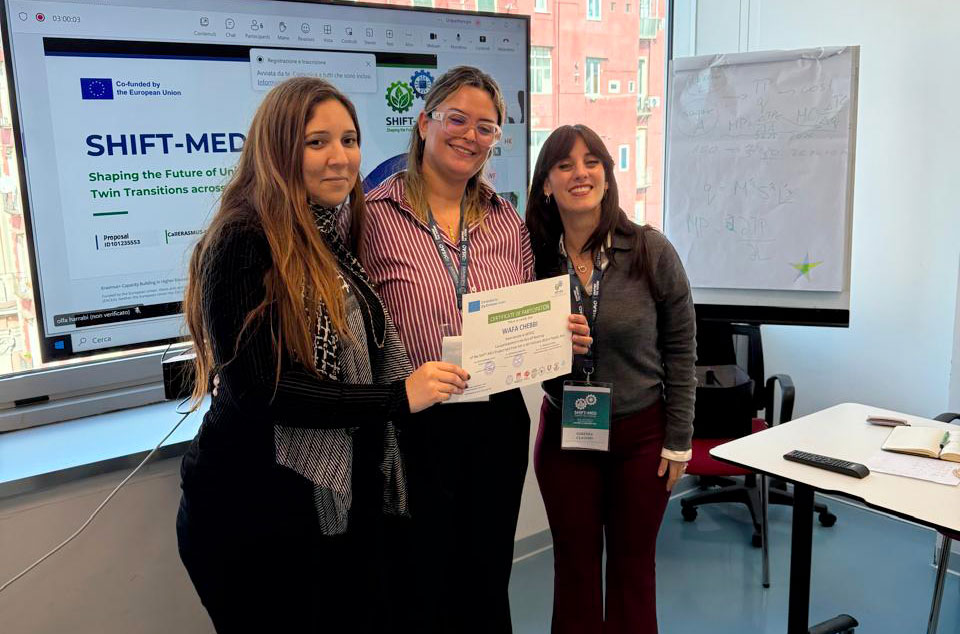
Through SHIFT-MED, DiSAQ takes part in a collaboration between universities and partner organisations from Europe and the MENA region aimed at strengthening the capacity of higher education institutions to address the green and digital transition.

In May 2026, DiSAQ delivered training sessions with the international partners of SHIFT-MED. These activities form part of the project’s pathway, which promotes interdisciplinary programmes on sustainability, digital innovation and the new skills required by the labour market, while also strengthening the capacity of academic and administrative staff. From this perspective, lifelong learning enables individuals and institutions to update their skills and adapt to technological and environmental change, contributing to the transition towards more sustainable and digitally mature economies.
TEEG – Training in entrepreneurial ecosystem simulation
03

TEEG – Training in entrepreneurial ecosystem simulation

The Entrepreneurial Ecosystem Game (TEEG) is a research-based tool that combines simulation and experiential learning. It makes it possible to analyse entrepreneurial ecosystems and to explore the effects of different strategic and policy choices.

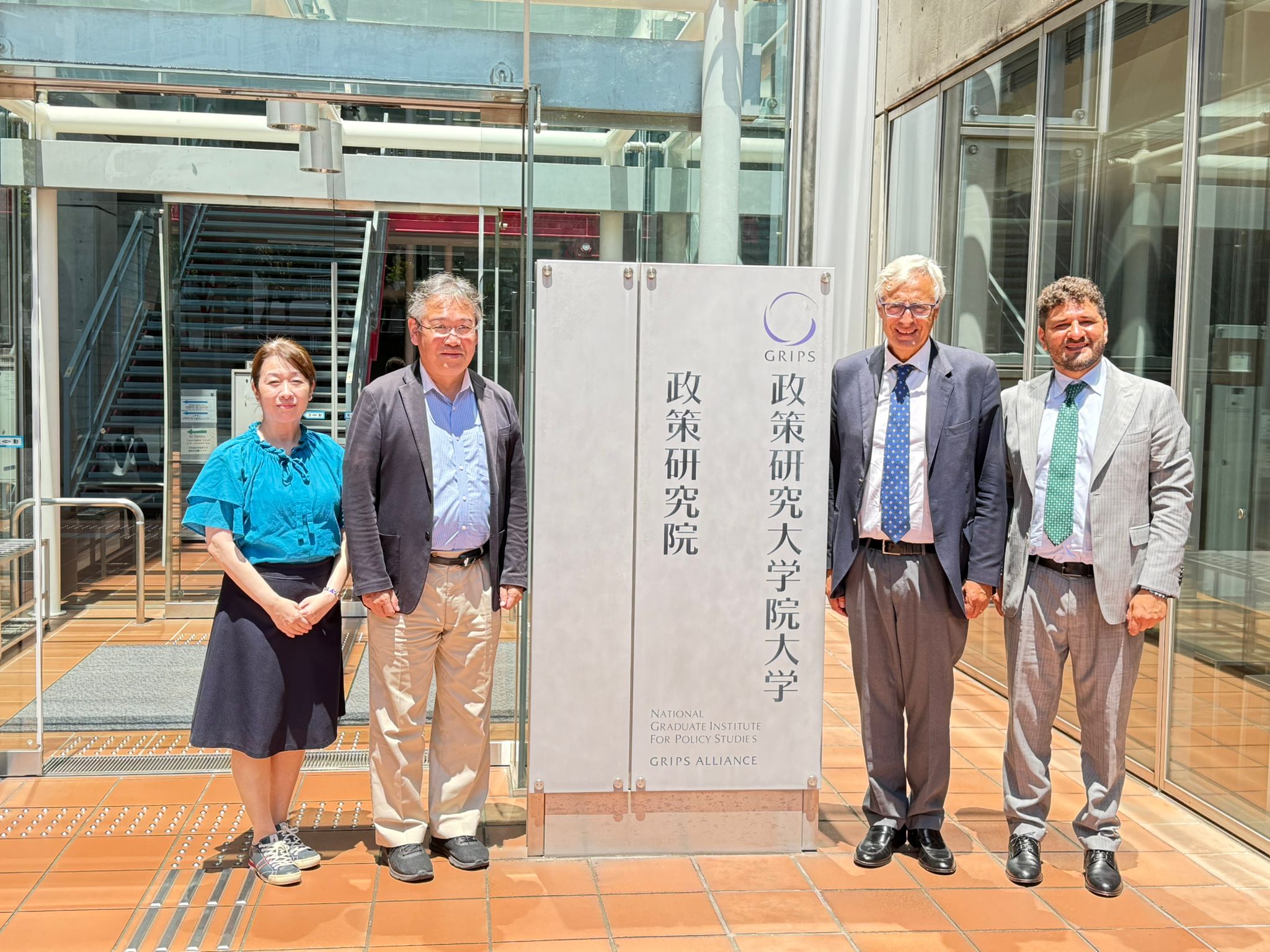
In January 2026, Marco Ferretti, Chiara Cannavale and Andrea Caporuscio held hands-on seminars at Sidi Mohamed Ben Abdellah University in Fez, Morocco, for Master’s and doctoral students, faculty members, ecosystem development professionals and public policymakers. The on-site activities were complemented by online training sessions with local Moroccan stakeholders.

Further on-site workshops are planned by the end of 2026 at the Universities of Sfax and Gabès, in Tunisia. Through these activities, the Chair shares a tool that helps participants assess possible interventions and design strategies for the development of entrepreneurial ecosystems.
SEA-EU 2.0 – European Universities of the Seas
04

SEA-EU 2.0 – European Universities of the Seas

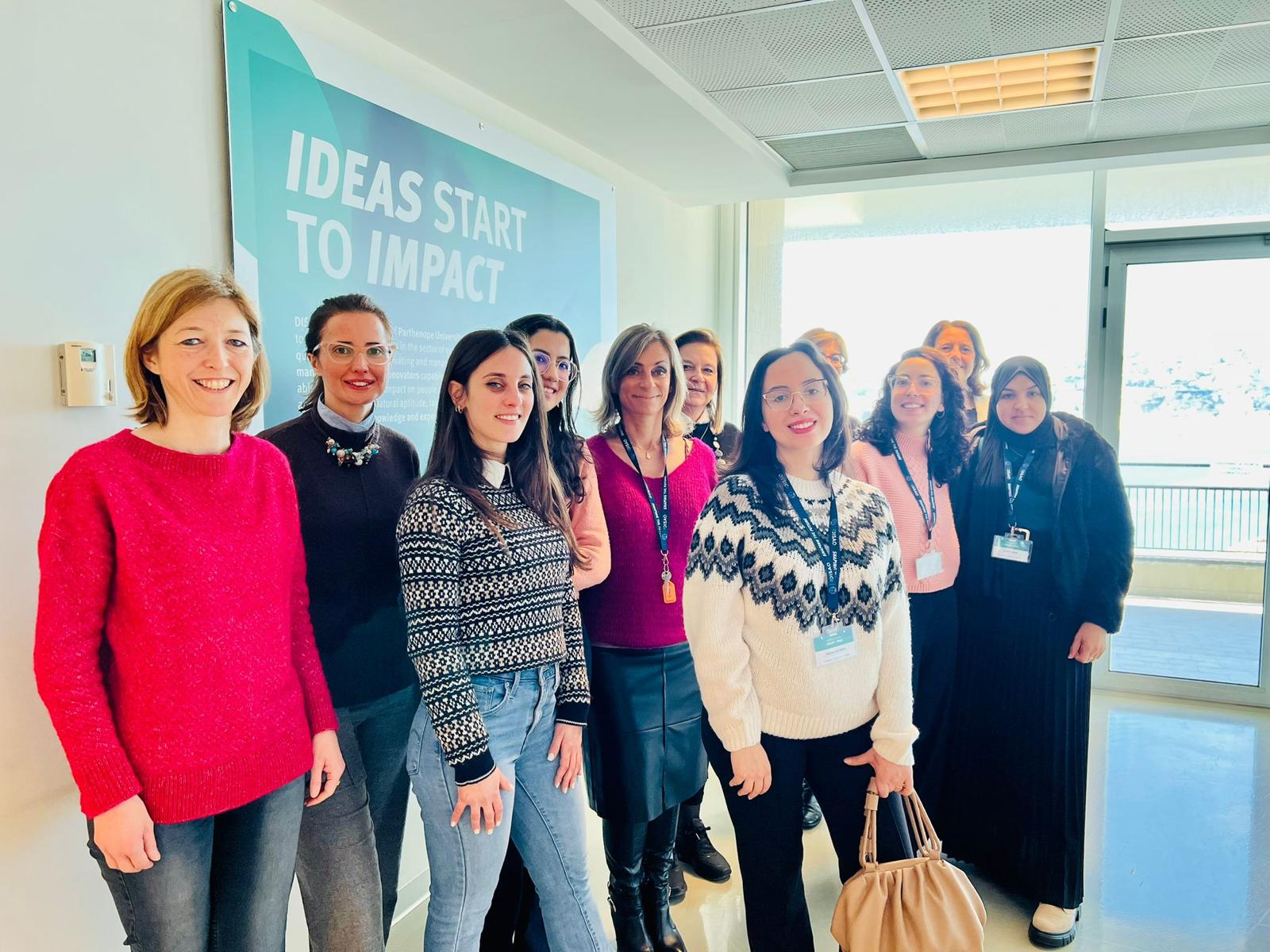
SEA-EU 2.0 is an Erasmus+ alliance bringing together nine European universities. The University of Naples Parthenope contributes to the work package aimed at strengthening the relationship between universities and society, coordinated for the University by Marcello Risitano. Within this framework, the Chair organised a Blended Intensive Programme (BIP) on innovation and entrepreneurship ecosystems for students from the Universities of Split, Gdańsk and the Algarve. https://sea-eu.org/

MOOC

MOOCs – Open, multilingual online learning.

The UNESCO Chair has developed two MOOCs (Massive Open Online Courses), free online courses available in Italian, English and French. The MOOCs offer the opportunity to explore entrepreneurship and innovation in depth, with flexible learning times and formats.

MOOC 01

Entrepreneurship 4.0

It guides participants from the initial business idea to the testing of a business model. Its 20 learning units, organised into four modules, cover idea generation, business design, building a partner network and validating the proposition in the market.

MOOC 02

Local Innovation Systems and Sustainability

It focuses on local and regional innovation ecosystems. The course addresses topics such as territorial competitiveness, sustainability, technology transfer, governance and social innovation, including in-depth sessions on cultural heritage, tourism, port logistics and internationalisation. (Currently being published online.)

Each learning unit includes a short video lecture, a core reading, a quiz and an in-depth video. The courses can be taken independently or used as supplementary resources within university and professional training programmes.

Publications

Articles, books and reports.

DiSAQ’s research on the themes of the UNESCO Chair translates into scientific articles, book chapters and institutional reports. The publications collected in this section address, from different perspectives, entrepreneurial and innovation ecosystems, inter-organisational collaboration, inclusion, digital transformation and sustainability.

  • Pietronudo, M. C., Claudio, L., Cannavale, C., & Ferretti, M. (2026). NGOs’ Contributions to Innovation: Innovation Enablers or Lead Innovators? Corporate Social Responsibility and Environmental Management, 33(2), 1594–1610. 10.1002/csr.70245
  • Kartti, N. Personal Values and Entrepreneurial Mindset: A Cross-Cultural Comparison between Italy and Morocco. Di prossima pubblicazione.
  • Parmentola, A., Pennacchio, L., Panetti, E., & Ferretti, M. (2025). Unveiling the drivers of SMEs’ cooperation with universities. Do firms’ CEO characteristics matter? Industry and Innovation, 32(9), 1037–1058. 10.1080/13662716.2025.2506583
  • Rapporto 2025 – Attività e risultati della Commissione ai Rapporti Istituzionali della Rete delle Cattedre UNESCO Italiane. Rapporto collettivo realizzato nell’ambito della Commissione ai Rapporti Istituzionali della ReCUI, con il contributo dei suoi membri, tra cui Michele Costagliola di Fiore e Nohaila Kartti.
  • Parmentola, A., Calza, F., Tutore, I., Costagliola Di Fiore, M., & Rescigno, E. (2025). From Vision to Action: Energy Communities as Models of Green Innovation Ecosystem. ISBN 979-12-80655-55-4.
  • Cannavale, C., Claudio, L., & Koroleva, D. (2025). Digitalisation and artificial intelligence development. A cross-country analysis. European Journal of Innovation Management, 28(11), 112–130. https://doi.org/10.1108/EJIM-07-2024-0828
  • Cannavale, C., Rivieccio, G., Claudio, L., & Nadali, I. Z. (2025). The translation of latent into actual entrepreneurship: the impact of GE. International Entrepreneurship and Management Journal, 21(1), 1–28. https://doi.org/10.1007/s11365-024-01017-w
  • Parmentola, A., & Costagliola Di Fiore, M. (2025). Exploring the dark side of entrepreneurial team diversity: A post-mortem analysis of failed start-ups. Journal of Management & Organization, 1–19. 10.1017/jmo.2025.10023
  • Claudio, L., & Gallo, S. (2025). An empirical analysis of how national culture influences banks’ sustainability via ESG criteria. Culture and Organization, 31(5), 375–400. 10.1080/14759551.2024.2443422
  • Risitano, M., La Ragione, G., Turi, A., & Ferretti, M. (2025). Analysing the relevance of Value Creation in the interconnection among Entrepreneurship, Marketing and Innovation: A Systematic Literature Review. International Journal of Entrepreneurial Behavior & Research, 31(2/3), 781–809. https://doi.org/10.1108/IJEBR-02-2022-0203
  • Satta, G., Vitellaro, F. G., Ganir Njikatoufon, A., & Risitano, M. (2025). Green strategies in ports: A stakeholder management perspective. Maritime Economics & Logistics, 27(1), 96–122. 0.1057/s41278-024-00294-0
  • Parmentola, A., & Costagliola Di Fiore, M. (2024). The effect of founding team characteristics on start-ups performance: The case of Campania. International Journal of Entrepreneurship and Small Business. DOI: 10.1504/ijesb.2024.10064923
  • Battaglia, V., Angrisani, M., Ferretti, M., & Risitano, M. (2024). Maritime Energy Efficiency: Emerging Trends and Key Performance Indicators. International Journal of Sustainable Development and Planning, 19(10), 3749–3757. 10.18280/ijsdp.191005
  • Cannavale, C., Rivieccio, G., Claudio, L., & Nadali, I. Z. (2023). The impact of gender egalitarianism on entrepreneurial cognition: a multilevel analysis. Quality & Quantity, 57(5), 4803–4826. 10.1007/s11135-022-01572-w
  • Cannavale, C., Claudio, L., Costagliola Di Fiore, M., & Parmentola, A. (2023). Communication en ligne et réseaux sociaux. In Innovation Sociale et Technologie pour une Meilleure Employabilité des Femmes Tunisiennes. ISBN 978-9938-78-489-3.
  • Ali, E., Parmentola, A., & Ali, U. (2023). Fostering Digital Entrepreneurship by Developing Entrepreneurial Mindset. In D. Matricano, L. Castaldi, W. Jackson III & L. Marino (Eds.), Entrepreneurial Processes in the Era of Digital Transformation (pp. 5–22). De Gruyter. DOI: 10.1515/9783110790313-002
  • Ferretti, M., Guerini, M., Panetti, E., & Parmentola, A. (2022). The partner next door? The effect of micro-geographical proximity on intra-cluster inter-organizational relationships. Technovation, 111, 102390. 10.1016/j.technovation.2021.102390
  • Fiorentino, R., Parmentola, A., Sapio, A., & Capurro, R. (2022). Entrepreneurial team heterogeneity and performance of academic spin-offs: a pre and postfoundation analysis. Studies in Higher Education, 1–17. 0.1080/03075079.2022.2122658
  • Ferretti, M., Fiore, U., Perla, F., Risitano, M., & Scognamiglio, S. (2022). Deep Learning Forecasting for supporting Terminal Operators in Port Business Development. Future Internet, 14(8), 221. https://doi.org/10.3390/fi14080221
  • Simoni, M., Schiavone, F., Risitano, M., Leone, D., & Chen, J. (2022). Group-specific business process improvements via a port community system: the case of Rotterdam. Production Planning & Control, 33(4), 371–385. DOI: 10.1080/09537287.2020.1824029
  • Risitano, M., Romano, R., Rusciano, V., Civero, G., & Scarpato, D. (2022). The impact of sustainability on marketing strategy and business performance: The case of Italian fisheries. Business Strategy and the Environment, 31(4), 1538–1551. DOI: 10.1002/bse.2968
  • Cannavale, C., Claudio, L., Rivieccio, G., & Nadali, I. Z. (2022). Enactment of entrepreneurial intention: is gender egalitarianism a facilitator or an inhibitor? International Journal of Entrepreneurship and Small Business, 45(2), 152–169. 10.1504/IJESB.2022.120980

SLIOB Reports

Reports of the Observatory on Local Innovation Systems (SLIOB).

The Observatory on Local Innovation Systems (SLIOB) contributes to the scientific activities of the DiSAQ UNESCO Chair through open-access studies on regional ecosystems. Its reports provide data and analyses of value to researchers, institutions and local stakeholders, drawing also on collaboration among scholars from Mediterranean countries.

Ferretti, M., Cannavale, C., Claudio, L., Zone, S., Franzese, G., Ernez Mrabet, M., & Rivieccio, G. (2025). Female entrepreneurship in mediterranean ecosystems. A comparative analysis of Italy and Tunisia.

The report compares women’s entrepreneurship in Italy and Tunisia, offering evidence that helps to understand the opportunities and obstacles faced by women entrepreneurs in the two contexts. It was produced by Marco Ferretti, Chiara Cannavale, Lorenza Claudio, Giorgia Rivieccio and Giuseppe Franzese, together with Salma Zone of the University of Monastir and Molka Ernez Mrabet of the University of Gabès.

Open the PDF

Calza, F., Simoni, M., Cannavale, C., Parmentola, A., Tutore, I., Claudio, L., & Costagliola Di Fiore, M. (2021). Il ruolo delle università nello sviluppo dei Sistemi Locali di Innovazione.

The volume examines the contribution of universities to the development and coordination of regional innovation ecosystems. The authors are Marco Ferretti, Chiara Cannavale, Adele Parmentola, Michele Simoni, Lorenza Claudio and Michele Costagliola di Fiore.

Open the PDF

Pietronudo, M. C., Ferretti, M., & Risitano, M. (2025). Green Innovation Ecosystem. Un’analisi degli ecosistemi green per la Blue Economy.

The report examines the green transition in maritime sectors, focusing on ecosystem governance, the sustainability of port activities and experiences in Europe, North Africa and the Middle East. It was produced by Maria Cristina Pietronudo, Marco Ferretti and Marcello Risitano.

Open the PDF

Through these studies, SLIOB helps to connect research on territorial dynamics with the decisions of institutions, businesses and other actors in innovation ecosystems.

Conferences

International
conferences.

The activities promoted by DiSAQ in line with the objectives of the UNESCO Chair include the organisation of, and participation in, international conferences. These events provide opportunities to present research findings and to engage with scholars and practitioners on innovation, entrepreneurship and sustainable development. Within some conferences, dedicated thematic sessions focus specifically on the Chair’s research areas.

20–23 May 2026

Digital Transformation Society 2026

Digital Transformation Society 2026 The Digital Transformation Society 2026 conference provides a forum for scientific exchange on digital transformation and its implications for organisations and society.

10–12 September 2025

The Marketing-Innovation Nexus: Past Insights for Future Challenges

Hosted by the University of Naples Parthenope, the 22nd Annual Conference of the Italian Marketing Association (Società Italiana Marketing) explored the relationship between marketing and innovation, with a focus on new entrepreneurial ideas and value creation for businesses and society.

26–28 October 2023

Responsible Management: Social Sustainability, Diversity and Inclusion

Hosted in Naples by the University of Naples Parthenope and co-organised with DiSAQ, the annual conference of the International Association of Cross-Cultural Competence and Management (IACCM) explored responsible management, social sustainability, diversity and inclusion in organisations.

In brief

Beyond academic mobility.

Taken together, these activities show how the Chair’s international cooperation extends beyond academic mobility: the missions combine skills development, dialogue with local stakeholders, the dissemination of innovative methodologies and the building of lasting institutional relationships. The Chair adapts knowledge and tools to different contexts, while keeping the Mediterranean and the MENA region at the heart of its work.