
University of Naples Parthenope · Department of Business and Quantitative Studies


Vision and Strategic Mission
To inspire and empower innovation ecosystems across the Euro-Mediterranean area and the MENA region, transforming academic knowledge and scientific research into enduring drivers of sustainable development, social cohesion and equity. The Chair aspires to establish itself as an international point of reference and an integrated platform capable of connecting higher education, the business community and public decision-makers, guiding the transition towards resilient, inclusive and evidence-based local economies.
Four Strategic Actions
The UNESCO Chair translates its vision into four interconnected strategic actions, designed to generate a lasting impact across the Euro-Mediterranean area and the MENA region by transforming higher education, research and cooperation into instruments of local empowerment and shared knowledge sovereignty.
During the initial four-year period (2022–2026), the Chair's action grounded its validity in the consolidation of international hospitality, the enhancement of female human capital in higher education, the adoption of cutting-edge simulation-based methodologies and initiatives with a high socio-economic impact.
Looking ahead to the 2027–2031 period, the Chair elevates its mission from a set of experimental interventions to a permanent infrastructure for teaching, applied research, policy learning and capacity building.
In alignment with the UNESCO Medium-Term Strategy 2022–2029 (41 C/4) and the International Decade of Sciences for Sustainable Development (2024–2033), the initiative operates as a neutral and rigorous interface capable of connecting higher education, advanced research, business ecosystems and evidence-informed decision-making processes.
It develops an integrated educational infrastructure that combines university programmes, open resources and micro-credential-based train-the-trainer models. The aim is to bridge cross-border gaps and to empower local educators and professionals to act as autonomous multipliers, ensuring permanent and self-renewing institutional capacity.
It places women from partner countries at the centre of decision-making processes, engaging them directly as trainers, researchers and co-designers. By embracing gender equality as a principle of social justice and a driver of ecosystem innovation, the action responds to actual local socio-economic dynamics, consolidating stable and enduring communities of practice.
It builds an operational bridge between research and public decision-making through experiential simulations and open-access studies conducted in applied laboratories. Academics, experts and decision-makers collaborate directly on real-world problems, translating scientific diagnoses into strategic roadmaps aimed at strengthening the resilience and competitiveness of local ecosystems.
It projects science diplomacy into an equitable dimension through permanent Think Tanks and stable networks linking Southern Europe, North Africa and Sub-Saharan Africa. By moving beyond hierarchical approaches in favour of co-creation, it ensures that Global South partners play a central role in shaping the scientific agenda, directly supporting UNESCO's Global Priority Africa.
Agenda 2030
The Chair’s entire conceptual and operational framework responds in a systemic and integrated manner to four key Sustainable Development Goals of the United Nations 2030 Agenda.
The Chair removes economic and geographical barriers to accessing higher education, expanding lifelong learning pathways in entrepreneurship for the benefit of students and faculty from the southern shore of the Mediterranean.
In full alignment with UNESCO’s Global Priority Gender Equality, the Chair enhances women’s employability, their access to doctoral programmes and their leadership in academia and business.
The Chair bridges scientific research and policymaking, strengthening territorial economic resilience and fostering local innovation ecosystems through simulation models and open-access evidence.
The initiative fosters South-South-North knowledge circulation and actively supports UNESCO’s Global Priority Africa, promoting multilateral cooperation and the direct engagement of local stakeholders.
Operational Macro-Objectives
The strategy underpinning the four operational objectives seeks to turn stakeholders across the Euro-Mediterranean and MENA regions from mere beneficiaries into co-designers and leaders in the Chair’s governance. Rather than isolated interventions, it builds autonomous institutional and human capacities designed to endure beyond individual projects. By integrating higher education, female leadership, data-driven policy learning and equitable South-South-North cooperation, it transforms research and teaching into levers of economic and social development, in line with the 2030 Agenda.
Education and higher education are conceived as global public goods and levers of territorial empowerment, capable of democratising knowledge capital and transforming learning from passive consumption into an endogenous and permanent capacity for self-development. The theoretical vision seeks to overcome cross-border educational asymmetries, laying the foundations for lasting scientific and cultural autonomy within the academic and institutional communities of the Mediterranean and the MENA region.
At the operational level, the pillar integrates the University's international educational pathway, comprising English-taught Bachelor's, MEMI Master's, MEIM Master's and PhD programmes, with open digital infrastructures such as multilingual MOOCs on entrepreneurship and local innovation systems. To ensure autonomous and lasting local capacity, the Chair adopts a train-the-trainer approach based on micro-credentials and advanced pathways such as the TEEG Ambassador certification, enabling faculty, researchers and practitioners from partner institutions to become autonomous multipliers of skills within their own territorial contexts.
Gender equality is an imperative of social justice and a structural lever for inclusive economic growth and territorial cohesion. The conceptual framework places female agency at the core of innovation processes and transforms women from marginalised actors into co-designers of change, overcoming the socio-cultural and economic constraints that limit women's participation and leadership in high value-added sectors.
Operationally, this commitment translates into the development of a gender-sensitive doctoral pipeline, with 50% of positions held by women researchers from MENA countries. The pillar builds on the cascade methodology of the INSAF-FEM project, in which female students transfer the skills they have acquired to civil society organisations and local training centres. In the new mandate, the action is further enriched by the co-design of a MOOC on female entrepreneurship, developed together with partner faculty, and by the adoption of digital badges for the formal certification of skills and leadership.
The interface between scientific research, public policymaking and corporate governance requires experiential paradigms capable of decoding the complexity of territorial innovation systems. The theoretical perspective identifies simulation and practice-based learning as a bridge for converting analytical data into strategic decisions, fostering the resilience, competitiveness and self-determination of local ecosystems.
In concrete terms, the third pillar employs the experiential simulator The Entrepreneurial Ecosystem Game (TEEG) in territorial TEEG Policy Labs and Work Labs, where mixed teams of researchers, decision-makers and experts analyse the challenges and real data of their own contexts to develop actionable roadmaps and policy briefs. This pathway is complemented by the scientific activity of the Observatory on Local Innovation Systems (SLIOB), which produces and disseminates open-access reports on topics of strategic relevance such as university governance, female entrepreneurship and the Blue Economy.
Science diplomacy and international cooperation are grounded in moving beyond traditional, asymmetric models of technology transfer in favour of dynamics of equitable co-creation and structural reciprocity. The approach promotes an open multilateral dialogue in which the integration of knowledge across Southern Europe, North Africa and Sub-Saharan Africa becomes the driver of sustainability and regional knowledge sovereignty.
In practical terms, the pillar consolidates a network of inter-university and institutional collaboration through the implementation of competitive international projects (including SHIFT-MED, FOODCHASE and the SEA-EU alliance), the signing of double degree agreements and the establishment of ongoing thematic Think Tanks. These stable structures guarantee Mediterranean and African partners a permanent role in shaping the Chair's educational and scientific agenda, transforming occasional exchanges into lasting and shared processes of knowledge co-production.
People
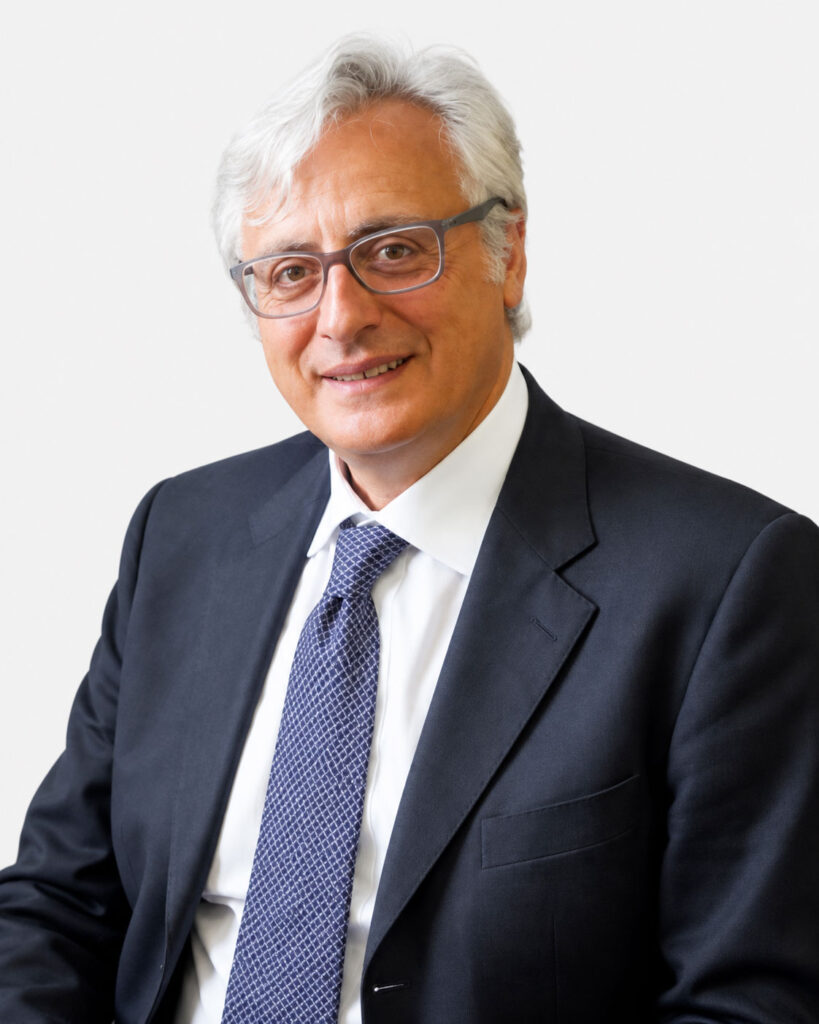
CHAIRholder
Prof. Marco Ferretti
Chairholder · Department of Business and Quantitative Studies (DiSAQ)
facilities
CHAIR NETWORK
Universities, institutions and enterprises across the Euro-Mediterranean and MENA regions that share projects, research and education with the Chair.
For collaboration proposals or information requests about activities and projects, please contact the Chair's Scientific Secretariat.
mailunesco.disaq@uniparthenope.itContact the Secretariatarrow_forward